
Kaitlyn Romoser first captured covid-19 in March, likely on a trip to Denmark and Sweden, simply as the scope of the pandemic was ending up being clear. Romoser, who is 23 and a lab researcher in College Station, Texas, evaluated positive and had a couple of days of mild, coldlike symptoms.
In the weeks that followed, she bounced back to what seemed like a complete recovery. She even got another test, which was unfavorable, in order to sign up with a study as one of the earliest donors of convalescent blood plasma in a quote to help others.
6 months later, in September, Romoser got sick once again, after a journey to Florida with her daddy.
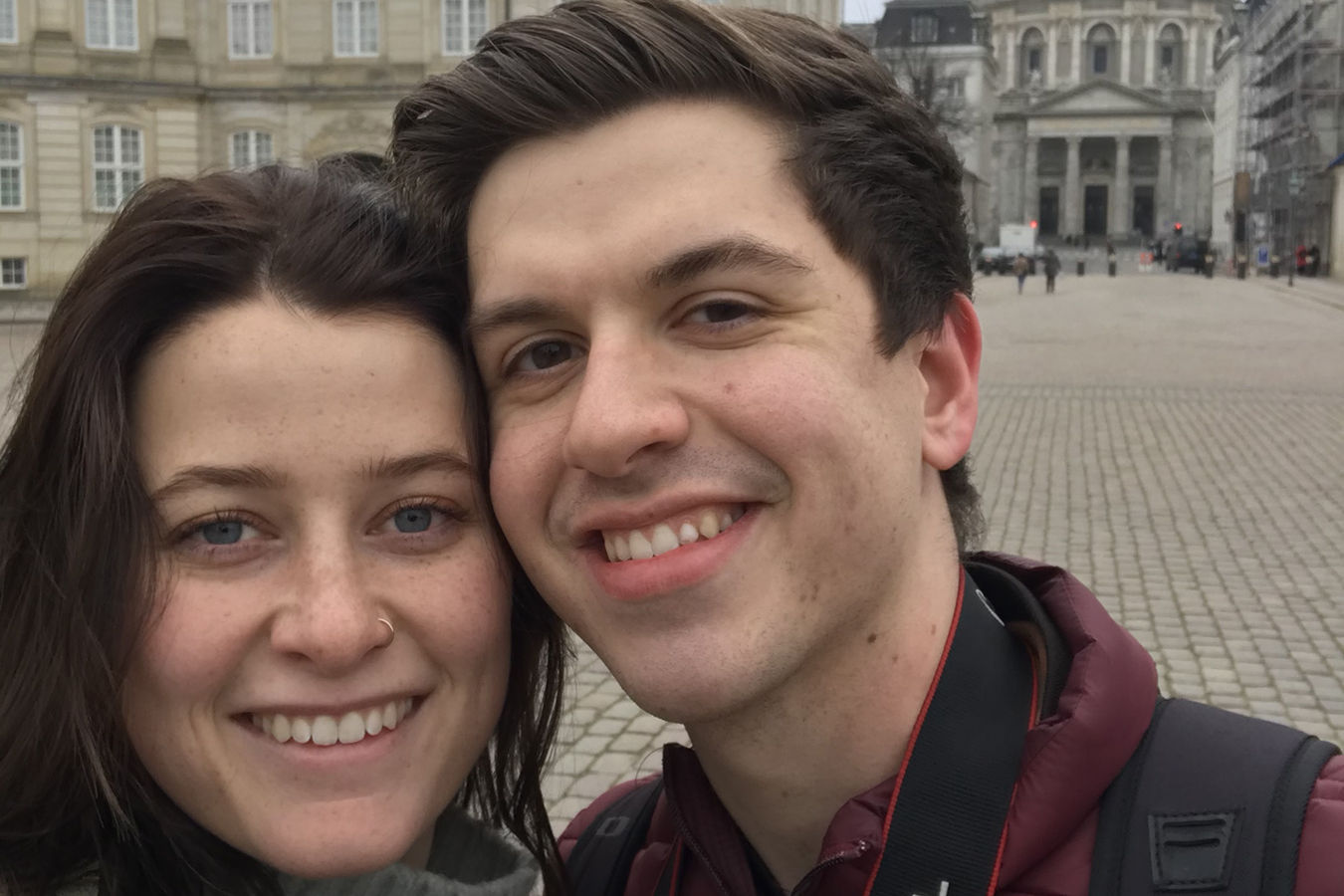
Romoser believes it was a clear case of reinfection, rather than some mystical reemergence of the original infection gone dormant.
” It would be nice to have proof,” stated Romoser. “I’ve literally been directly up called a liar, due to the fact that people do not wish to think that it’s possible to be reinfected. Why would I lie about being sick?”
As countless Americans battle to recover from covid and millions more scramble for the defense provided by vaccines, U.S. health officials may be overlooking an upsetting subgroup of survivors: those who get infected more than when. Determining how common reinfection is amongst people who contracted covid– as well as how quickly they end up being vulnerable and why– carries crucial ramifications for our understanding of immunity and the nation’s efforts to devise an efficient vaccination program.
Scientists have actually validated that reinfections after initial health problem brought on by the SARS-CoV-2 infection are possible, however up until now have actually defined them as uncommon. Less than 50 cases have been validated worldwide, according to a international reinfection tracker Just 5 have actually been validated in the U.S., including two spotted in California in late January.
That sounds like a rather unimportant number.
KHN sent out queries about reinfection security to all 50 states and the District of Columbia.
In Washington state, for example, health officials are examining almost 700 cases that satisfy the requirements for possible reinfection, with three dozen awaiting hereditary sequencing and simply one case validated.
In Colorado, authorities approximate that possible reinfections comprise just 0.1%of favorable coronavirus cases. With more than 396,000 cases reported, that implies nearly 400 people may have been contaminated more than once.
In Minnesota, officials have examined more than 150 cases of thought reinfection, however they do not have the genetic material to verify a medical diagnosis, a spokesperson stated.
In Nevada, where the first U.S. case of covid reinfection was recognized last summer season, Mark Pandori, director of the state public health laboratory, said there’s no doubt cases are going undetected.
” I anticipate that we are missing out on cases of reinfection,” he stated. “They are extremely difficult to establish, so you need specialized groups to do that work, or a core lab.”
Such cases are different from circumstances of so-called long-haul covid, in which the original infection triggers incapacitating signs that stick around for months and viral particles can continue to be spotted. Reinfection occurs when a person is infected with covid, clears that pressure and is infected again with a various stress, raising concerns about sustained immunity from the illness. Such reinfections take place regularly with 4 other coronaviruses that flow amongst human beings, causing common colds.
Centers for Disease Control and Avoidance guidelines call for examining for possible reinfection when someone tests favorable for covid at least 90 days after an initial infection (or at least 45 days for “extremely suspicious” cases). Confirmation of reinfection needs genetic sequencing of paired samples from each episode to inform whether the genomes included are various.
But the U.S. does not have the capability for robust hereditary sequencing, the process that determines the fingerprint of a particular infection so it can be compared to other strains. Jeff Zients, head of the federal covid task force, noted late last month that the U.S. ranks 43 rd in the world in genomic sequencing.
To date, just a portion of positive coronavirus samples has been sequenced, though the Biden administration is working to rapidly expand the effort. On Feb. 1, CDC Director Dr. Rochelle Walensky told press reporters that sequencing has actually “increased significantly” in recent weeks, from 251 sequences the week of Jan. 10 to 2,238 the week of Jan.24 The agency is dealing with personal companies, states and academic laboratories to ramp up to 6,000 sequences weekly by mid-February.
Washington’s state epidemiologist for infectious diseases, Dr. Scott Lindquist, said officials have prioritized hereditary sequencing at the state lab, with strategies to start genotyping 5%of all samples collected. That will enable officials to sort through those almost 700 potential reinfections, Lindquist said. More important, the effort will also assist indicate the presence of considerably altered types of the coronavirus, known as variations, that could impact how quickly the infection spreads and, possibly, how sick covid makes individuals.
” Those two locations, reinfection and variations, may cross paths,” he said. “We wanted to remain in front of it, not behind it.”
The specter of reinfections complicates one of the central questions of the covid danger: The length of time after natural infection or vaccination will individuals stay immune?
Early studies recommended immunity would be short-lived, just a few months, while more current research discovers that particular antibodies and memory cells may persist in covid-infected patients longer than eight months.
” We really don’t know” the marker that would signal resistance, stated Dr. Jason Goldman, a contagious illness professional at Swedish Medical Center in Seattle. “We don’t have the test you could perform to state yes or no, you could be infected.”
Goldman and colleagues validated a case of reinfection in a Seattle male last fall, and ever since have determined 6 or 7 possible cases. “This is a far more typical scenario than is being recognized,” he stated.
The possibility of reinfection implies that even clients who’ve had covid require to stay alert about curbing re-exposure, said Dr. Edgar Sanchez, a transmittable illness physician at Orlando Health in Florida.
The message is comparable for the wider society, said Dr. Costs Messer, an expert in viral genetics at Oregon Health & Science University in Portland, who has actually been considering the cultural psychology of the covid reaction. Evidence suggests there might not be a precise return to regular.
” The concept that we will end this pandemic by beating this coronavirus, I do not believe that’s really the method it’s going to take place,” he stated. “I believe that it’s most likely that we’re going to learn how to be comfortable living with this brand-new infection distributing among us.”

No comments:
Post a Comment