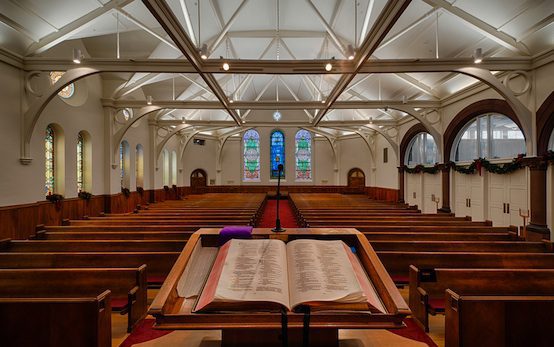
Still-closed holy places need to be resumed as quickly as possible for the health of our neighborhoods.
As churches, mosques, synagogues, and other spiritual organizations resume and invite neighborhoods back inside for prayer and events, there are concerns of how in-person engagement will alter due to the international pandemic. Even prior to COVID-19, the United States saw a substantial increase personallies of no faith, in addition to a decrease in participation and subscription levels such that by 2020 just 47 percent of U.S. grownups came from a church, synagogue, or mosque.
The number who will return face to face to these spiritual areas is an open concern and it is crucial our spiritual organizations are focused on, restored, and renewed as the country resumes. These organizations strengthen and support the bigger neighborhoods they are ingrained in, and it is very important that they stay diffused in nonreligious, metropolitan locations, not simply in backwoods and towns.
A study of over 1,400 Americans sponsored by the Los Angeles Times and Truth Inspect Insights reveals simply how effective engagement with a spiritual organization can be outside the church or temple itself.
The study inquired about satisfaction of the “American Dream” and different factors to satisfaction with life. Genuine distinctions emerged when thinking about faith. Nearly half of Americans who go to services a couple of times a month or more frequently think they are living the American Dream, compared to a little under a 3rd of those participating in a couple of times a year or less frequently. When inquired about the value of adding to one’s broader property neighborhood, about a 3rd of Americans who participate in services just a couple of times a year (or less frequently) believed adding to one’s neighborhood was necessary. On the other hand, over half of those who participate in church a couple of times a month or regularly believed common contributions were necessary– a considerably greater percentage.
Public law needs to be crafted to assist these organizations re-open as quickly as possible and flourish, since they are the bedrocks of the civic and spiritual health of numerous neighborhoods. While having a significant domesticity was similarly essential to those who frequently go to services and those who do not, domesticity is inward looking. External dealing with neighborhood contributions are important for stability and social capital and the information reveal that Americans engaged with spiritual organizations are more concentrated on adding to the bigger world.
In addition to spiritual organizations assisting prime broader neighborhood engagement, the information expose that engagement enhances marital relationship rates, another organization which enhances neighborhoods and households. For those over 26, practically two-thirds who frequently participate in spiritual services are wed, compared to simply over half who do sporadically participate in services. The varieties of divorcees is two times as high for those who are consistently detached compared to those who routinely go to services. And routine church goers are a bit most likely to have kids under 18 living in the house compared to those who do sporadically participate in, so the effect of individuals in spiritual organizations in reinforcing neighborhoods through schools and public features appears once again.
Relatedly, while stories are plentiful about spiritual Americans running out touch with truth, the study discovered little difference about choices for the variety of a neighborhood from those who are spiritual. When inquired about their perfect neighborhood, spiritual Americans were as open up to a varied neighborhood as those who were nonreligious. Many chosen politically variety; just 12 percent of routine professionals and 8 percent of non-practitioners felt that living in a location where their next-door neighbors shared political views was necessary. Both spiritual and non-religious participants had nearly similar views in reaction to concerns about neighborhood sharing a racial or ethnic background. When socio-economic status was queried, the distinctions were once again small. Jointly, this recommends that spiritual followers disappear most likely to segregate themselves from those who vary from them than are the non-affiliated.
Lastly, spiritual Americans are dispersed throughout the country and not walled off into specific parts of the nation. Contrary to the common belief that backwoods are the domain of the spiritual and cities that of the nonreligious “nones,” there are just small spiritual distinctions by spatial location. Amongst those who seldom go to services, about a 3rd reside in cities, suburban areas, and backwoods and towns, respectively. Routine worshipers are not dominant in rural locations and little towns either; practically 40 percent live in suburban areas, another 3rd live in cities, and hardly 30 percent live in rural locations.
Extremely engaged followers are not balkanized by earnings and geographical area and brand-new study information reveal simply how effective being active in these organizations can be in regards to strengthening neighborhood and society. More active congregants are most likely to be wed and stay married, in addition to be interested in enhancing the areas and neighborhoods in which they are ingrained. These active congregants are actually external looking compared to those who are not associated with organizations of faith.
Policy makers ought to actively assist resume our spiritual. Provided the favorable effect of spiritual participation on neighborhood health and organizations, states and areas ought to focus on opening spiritual organizations, and the spiritual and ordinary management of these companies must excitedly look for to re-engage and grow their churchgoers and neighborhoods.
Samuel J. Abrams is teacher of politics at Sarah Lawrence College and a going to scholar at the American Business Institute.

No comments:
Post a Comment