Patients cram medical facility corridors and spill into driveways. Intensive care units are full as the coronavirus thins the ranks of already-overstretched medical workers. Individuals rush from pharmacy to drug store, plead with good friends or turn to the black market for ventilators, medicines and infant milk.
Lebanon’s medical system is giving in a post-holiday COVID-19 rise that has actually killed practically as many people in January alone as passed away from the illness all in 2015.
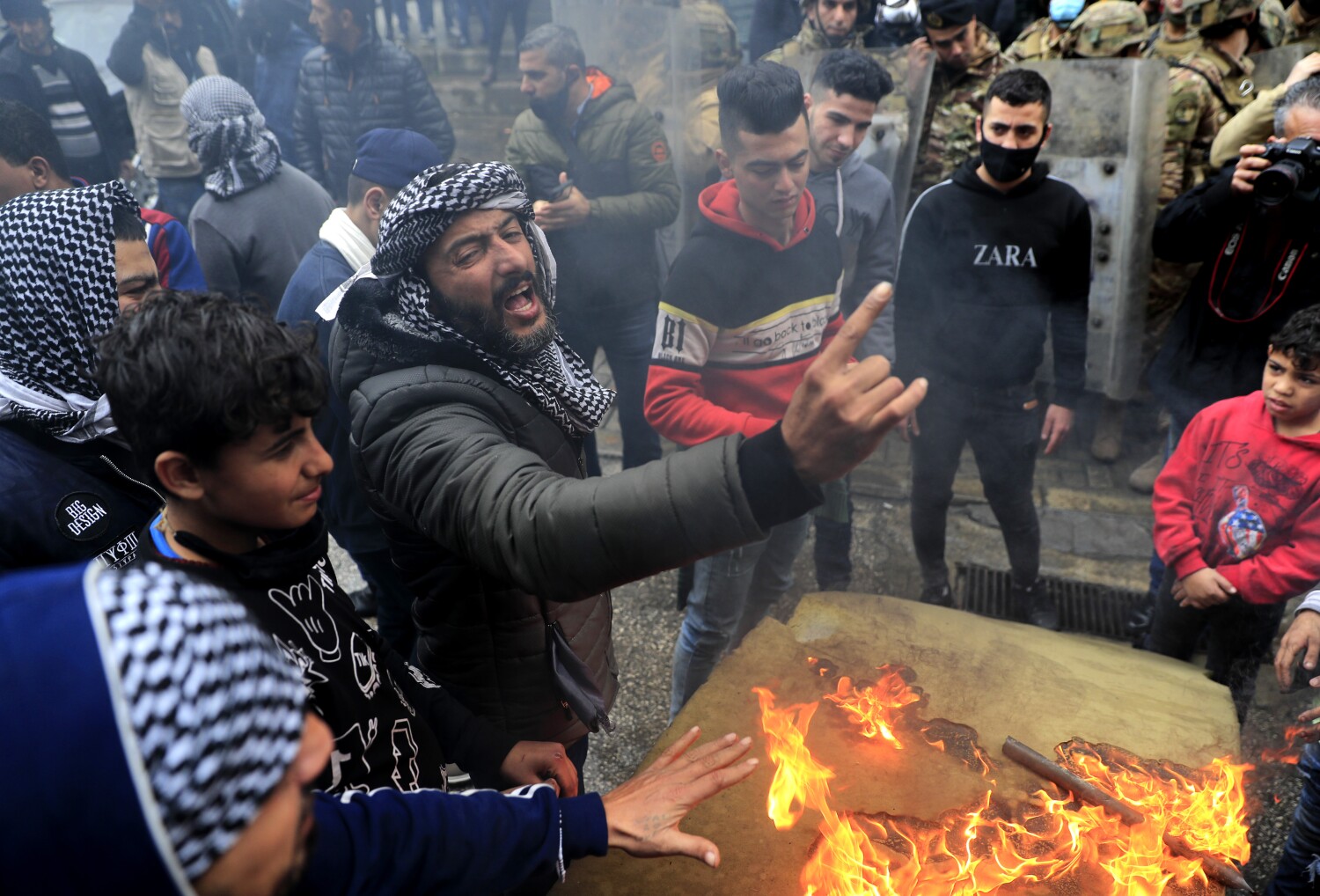
To stave off a disaster like those seen in Italy and Iran, the Lebanese government has enforced the harshest lockdown the country has seen since the start of the pandemic That has taken its own ravaging toll: the near-evisceration of an economy already on the brink Public frustration with the coronavirus limitations boiled over last week in Tripoli, Lebanon’s second-largest city and likewise its poorest, where for four successive nights protesters stormed federal government buildings, triggered fireworks and tossed rocks as authorities lobbed canisters of tear gas.
The lockdown is set to end next week, in spite of warnings from medical officials that a rash reopening might eliminate its hard-won gains. But with Lebanese turning desperate and majority the nation living listed below the hardship line, even they acknowledge that further economic pain might be just as deadly.
The dilemma highlights the grim calculus facing federal governments across the world, specifically in poorer countries, as they run in the razor-thin margins between a public health crisis and financial oblivion.
” We open, individuals pass away; we close, individuals die,” says Dr. Firass Abiad, who heads Lebanon’s main public hospital treating COVID-19 patients. “If they’re not dying from COVID, they’re passing away from appetite.
” It’s just various faces of the very same bad coin.”
Early in the pandemic, Lebanon was promoted as a success, marshaling its meager resources into an action that limited the spread of infection. A series of crises– consisting of the enormous Aug. 4 blast in Beirut’s port and a monetary collapse that has cleaned out 80%of the local currency’s worth against the dollar– has hampered Lebanon’s capability to deal with the pandemic, said Iman Shankiti, the World Health Company’s representative in the country.
So when the federal government permitted what critics said was an ill-timed opening for the vacations in December, it sped up a coronavirus cataclysm.
By mid-January, authorities imposed a complete lockdown, with an exemptions system that was strictly kept track of. It reduced transmission rates, offering healthcare facilities some break.
” We’re steady. We’re holding,” Abiad stated. “The concern now is how do we come out of lockdown? Do we extend it? Do we ease it slowly?”
On Wednesday, authorities reported 89 coronavirus-related deaths, a record number in one day for Lebanon, along with 3,320 brand-new cases, which brought the nation’s cumulative tally to 309,162 validated infections.

A Lebanese health care employee in Beirut.
( Anadolu Firm/ Getty Images)
Those numbers imply the nation’s healthcare system is still in the red zone and can not handle another rise, professionals state. Though a loan from the World Bank had in the last few months broadened the capacity of public and private hospitals dealing with COVID-19 cases, a deficiency of about 200 ICU beds remains, Shankiti stated.
The most significant restricting aspect for further expansion, Abiad said, is the unavailability of medical personnel.
” Too lots of working the flooring got corona and had to stop,” stated one nurse at the American University of Beirut Medical Center, a top-flight medical center in the capital.
Those remaining can barely keep up, he stated.
” We’re like a vehicle going flat-out all the time. It’s just too much,” he stated. Making things worse, some 30 of his coworkers have left the country in the last couple of months to pursue better-paying jobs in the Gulf, where nurses can make more than $2,400 a month– a tempting deal compared to staying in Lebanon, where many have actually seen their wages cut or gone overdue.
The currency crash has likewise triggered issues throughout the health care sector’s supply chains. Importers now wait months for the reserve bank to pay the bill for subsidized dollar transactions on medical products.
Salma Assi, head of Lebanon’s distribute of medical equipment importers, complained of waiting on months for shipments of ventilators and oxygen concentrators– a non-invasive technique of providing clients oxygen– to get cleared by the reserve bank. That has resulted in a black market in ventilators of suspicious quality for $700 to $1,500 apiece– two times their typical price.
” You’re seeing individuals like the area grocer or flower shop buying this sort of devices and selling it to their customers. A few days ago I saw somebody offering a Chinese-made ventilator on OLX,” Assi stated, describing a popular online market.
Medications are a bigger issue. The central bank burned through some $1 billion in 2020 to subsidize medications. But with hard currency reserves falling rapidly, government authorities in current months gone over raising all subsidies. That began a wave of hoarding that emptied pharmacy racks of even standard medication such as cortisone, blood slimmers, diuretics and painkillers.
” There are shortages of all of these even in healthcare facilities. If these medications are missing out on, it can lead to death,” said Ghassan Amin, who heads Lebanon’s drug stores’ union.
” Our issue is that whatever is unidentified. The central bank hasn’t informed us anything. We do not know how much money there is to determine our priorities.”
The backdrop to the scarcities has been a broader crisis in which 94%of the nation’s population make below the base pay, according to a current research study from humanitarian group CARE International, with almost three-quarters of those spoken with living in financial obligation.
Monday brought news of another financial blow: The rate of flatbread, a staple funded by the federal government, would increase by more than 20%, the state-run National News Company said.

A protester throws a rock at riot police during a Jan. 28 demonstration against deteriorating living conditions and coronavirus lockdown measures in Tripoli, Lebanon.
( Hussein Malla/ Associated Press)
On The Other Hand, Hassan Diab, the country’s caretaker prime minister, said Wednesday that the army had actually begun distributing a long-promised government month-to-month help package of 400,000 Lebanese lira– amounting to less than $50 at the market rate– to 230,000 families.
Without any good choices offered, authorities have actually pinned their hopes on a fast COVID-19 vaccine rollout. Lebanon, which operates under a power-sharing agreement in between the nation’s 18 fractious sects, is suffering from a months-long political stalemate, along with a deeply unpopular caretaker federal government. Couple of think it depends on the job.
In recent statements to local media, government officials in addition to sectarian leaders say they have actually protected some 6 million vaccine dosages– enough for just half the nation’s 6.8 million people. Last month, the health minister in Lebanon’s caretaker government, which has supervised since the Beirut blast, stated the first batch of vaccines would show up in mid-February.
Abiad, the medical facility doctor, cautioned that sluggish distribution of the vaccine could permit the coronavirus to mutate into a new strain before sufficient individuals are inoculated versus the existing one.
” COVID is a stern test, and major countries are being embarrassed by it,” he stated.
” You need to get your act together. You have to do an exceptional task. Even an excellent job is no longer enough.”

No comments:
Post a Comment