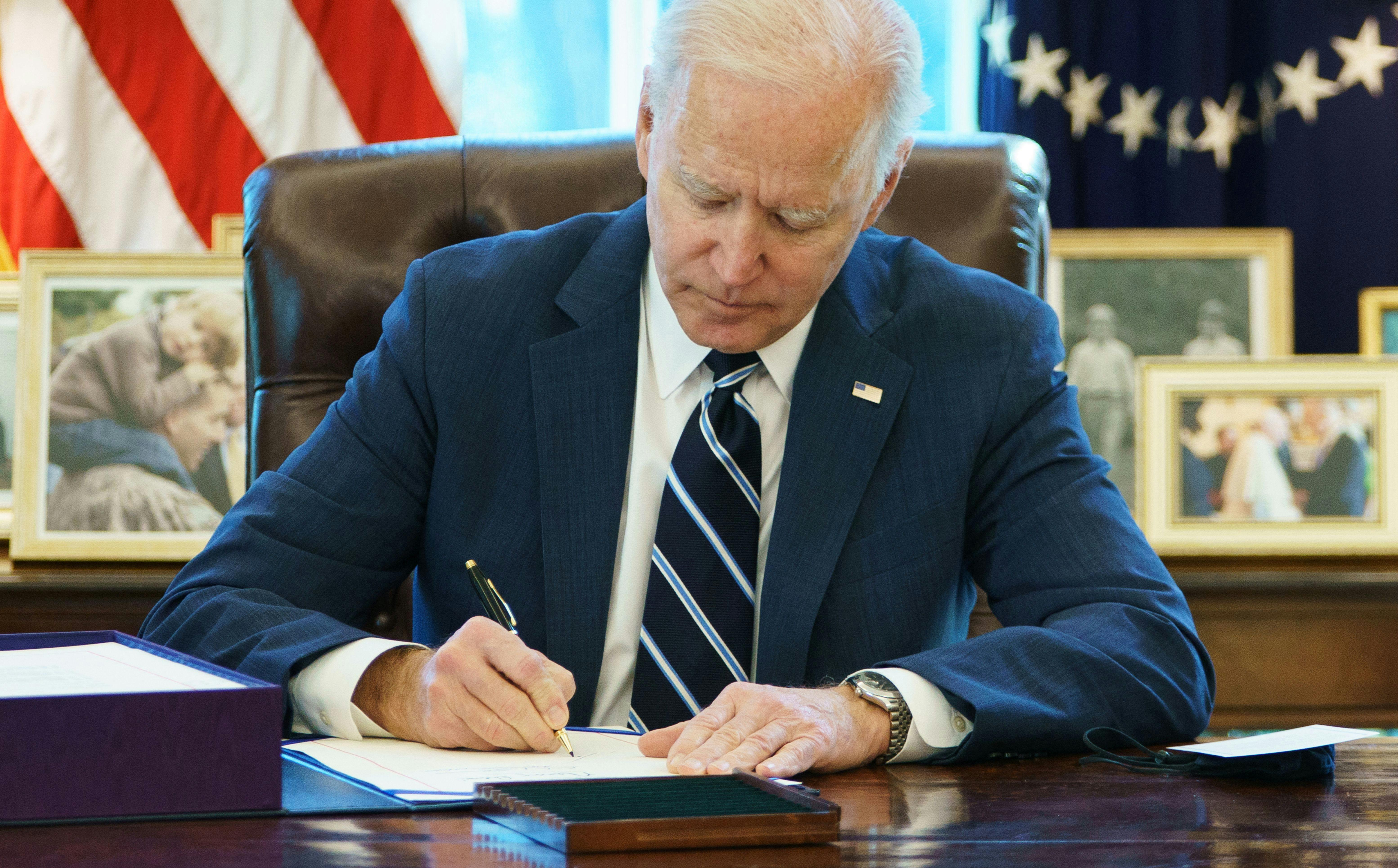
In his first primetime address to the nation Thursday night, President Joe Biden will likely invest a minimum of a little time touting the arrangements of the American Rescue Strategy Act, the $1.9 trillion coronavirus relief bundle Biden signed into law Thursday afternoon. According to a current internal memo, Biden, obviously keener to take credit for his successes than Obama was, will likewise be sending out surrogates throughout the country in the days ahead to spread the recommendation about the costs. “We’re going to ensure the American people know tangibly what the Rescue Strategy suggests for them,” deputy chief of personnel Jen O’Malley Dillon discussed to senior staffers.
Tangibly, it indicates a lot. Beyond the $1,400 stimulus checks and an extension to the federal unemployment supplements– both downsized over the course of settlements by moderate Democrats— the Rescue Strategy amounts to a big, short-lived growth of the American welfare state. The provision that has justly gotten the most attention from progressive specialists is a 1 year increase and expansion of the Kid Tax Credit. Under existing policy, CTC advantages are slowly phased in and out by income, which limits or eliminates the credit for the nation’s poorest households— the fruit, in wonky policy style, of delirious, racist propaganda about welfare and work. This year, under the Rescue Plan, the CTC will have no phase-in, be dispersed monthly, and have its optimum benefit broadened by as much as 80 percent, from $2,000 per kid to $3,600 for children under six or $3,000 for older children. Those modifications are anticipated to cut kid poverty by almost half— and that’s before a different growth of the Earned Earnings Tax Credit, the unemployment supplement, and the stimulus checks are factored in.
As an entire, according to the Tax Policy Center, the Rescue Plan will enhance the income of the typical family in the poorest quintile of earnings earners by more than 20 percent. Last week in The New York City Times, Employ America’s Elizabeth Pancotti offered a few theoretical examples of Americans who may benefit, in order to make those numbers concrete. “For a working single mom of a 3-year-old who earns the federal minimum wage— just under $16,000 a year— the bill would offer as much as $4,775 in direct advantages,” the Times‘ Jim Tankersley wrote “For a household of four with one working parent and one who remains unemployed because of child care restraints, the advantages could total $12,460”
And there’s much more. The Rescue Strategy likewise significantly broadens Obamacare aids for the next two years, supplies $86 billion in moneying for struggling union pension, and consists of 10s of billions in funds specifically for racial minorities: $ 5 billion in debt relief and other help for minority farmers as well as more than $31 billion for Native American neighborhoods, the largest such investment in American history.
So less than 2 months into his term, Joe “absolutely nothing will basically alter” Biden has actually signed an extremely expensive and historic piece of legislation. It’s not apparent we must be amazed by this. The expense is a response to a really costly and historical emergency that has eliminated over half a million Americans. Offered the empirically clear insufficiency of federal stimulus in 2009 and the amazing nature and scale of the coronavirus crisis, a very large and extensive package was to be expected.
It holds true, though, as lots of progressives have actually firmly insisted over the past a number of days, that changes in the country’s ideological landscape over the past decade are probably responsible for the shape the Rescue Plan took and some of its arrangements. The left has actually scared the Democratic Celebration establishment in high-profile primaries and shifted a policy discourse now populated by far more left-leaning reporters and policy experts than there have been at any point in recent memory. Centrists, by contrast, have been the victims of their own success: With the full run of American politics for most of the last 30 years, they’ve failed to produce options adequate to the scale of the issues the nation deals with and are clearly out of ideas beyond a conviction that whatever progressives are proposing at any given moment should be smaller in scope. That merely isn’t fertile ground for meaningful policymaking in a crisis.
But the crisis is coming to an end. When it does, things will be looking up for both Americans eager to resume their typical lives and the policy voices who oppose enhancing them further. The concern lots of analysts have actually asked over the last week— why the right has actually been louder in defense of Dr. Seuss than in opposition to a “totally free cash” pandemic relief plan supported by more than 60 percent of the country— really answers itself. We can expect them to be more mindful to more controversial products on Biden’s program. However progressives need to most likely be more anxious about their challengers within the Democratic coalition, who will continue forming and shrinking Democratic bills before Republicans even get a say on them. Centrist policy specialists might be losing their grip on a large share of the Democratic Party’s politicians and they are clearly out of touch with voters. As negotiations over the Rescue Strategy’s checks and unemployment benefits illustrated, they still have the ear of the moderate and conservative Democrats in the Home and Senate who are functionally running the party in Congress.
In the weeks ahead, the word on their lips will be “inflation.” And today, Politico provided an early preview of both the “furious debate” to come and how the majority of the press will cover it. The Rescue Strategy, Politico’s Ben White alerted, “might be an intense accelerant for worldwide markets as gas rates surge, home costs leap, speculative properties soar and financiers progressively fear the kind of sharp inflation spike that can hit with remarkable speed if the government puts too much fuel on a currently warming economy.”
” It will be a moment of splendor for Biden when he signs the brand-new relief act upon Friday, the focal point of his early agenda,” he continued. “However a sunny ending is not fully guaranteed, with the country taking an almost completely new path on handling the economy.”
While the Rescue Strategy is a genuine achievement, a full agenda— on hardship, climate, health care, and other problems, still lies ahead on that path. And, in fact, the size and scale of the Rescue Plan reflects an uncertainty on the part of the administration and Democrats in the quantity of development that can be made in independent legislation untethered to the pandemic. Would money for union pensions have handed down its own? Will a $15 base pay, now that the effort to staple that to Covid relief has failed?
All told, talk about the expense and the Biden administration representing an end to the age of small government post-crisis is premature, in part due to the fact that Biden has still not made a Covid-independent argument for big government In January, Timothy Noah provided an informing read of his inaugural address:
He didn’t say, “I’m for big federal government, and I’m going to make it bigger.” He did say this: “We can right wrongs. We can put individuals to operate in good tasks. We can teach our children in safe schools. We can overcome the deadly infection. We can reward work and reconstruct the middle class and make healthcare secure for all. We can deliver racial justice and we can make America once again the leading force for good on the planet.” Biden didn’t state that the federal government can do these things, but that’s what he indicated.
But if that’s what he meant, he ought to make it clear— less to the American people in the aggregate, who currently believe it, but to the legislators who are almost particular to advise the administration to call things back as soon as the pandemic winds down. If he doesn’t, and progress stalls, progressives should enhance their own efforts to advance that argument instead of resting on their laurels and assuming the Democratic policy shift will be sustained by its own momentum.

No comments:
Post a Comment