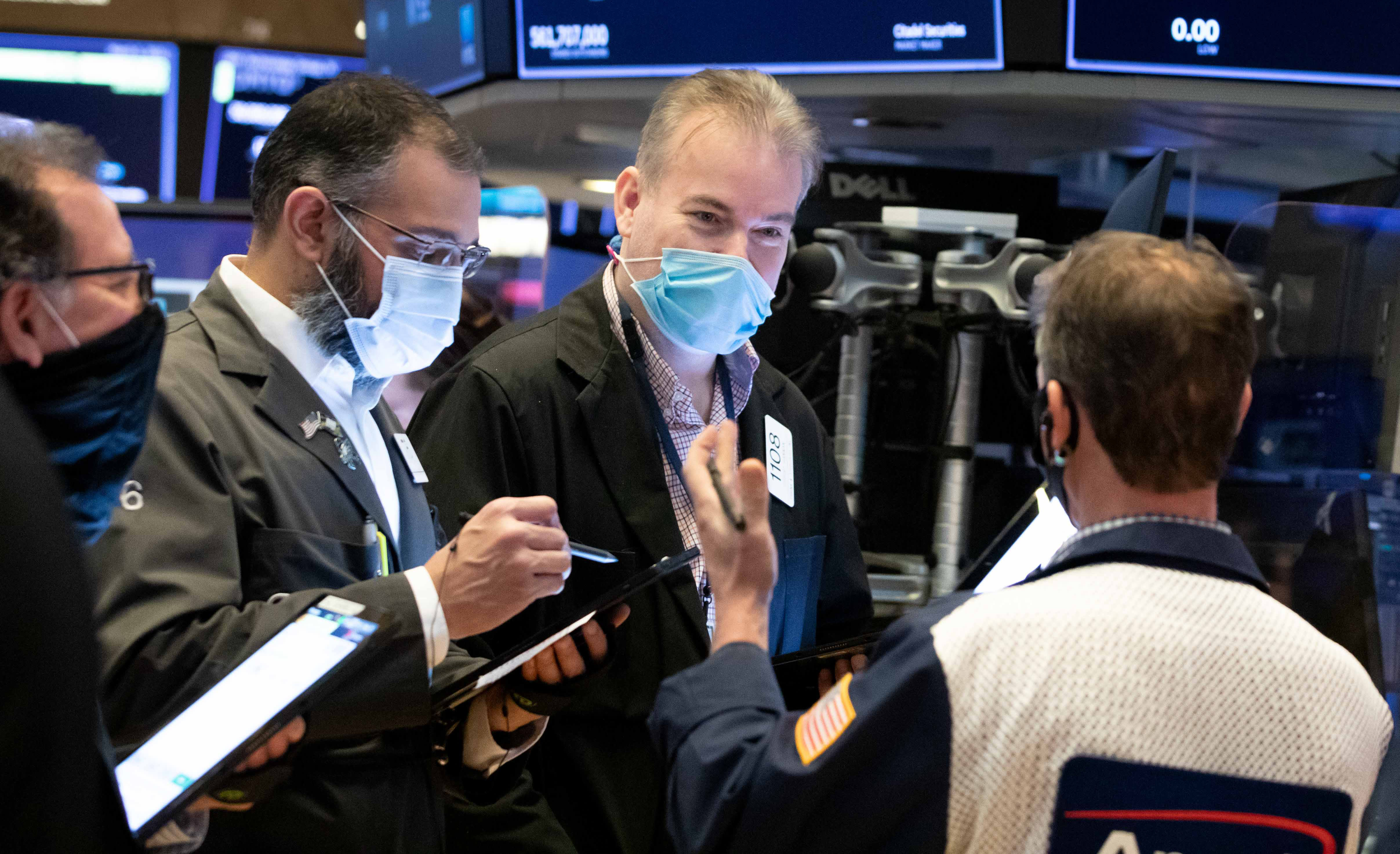
The Dow Jones Industrial Average got on Monday as investors stacked into economic return plays after Senate approval of a new Covid stimulus bundle, while a continuous sell-off in high-flying tech shares put pressure on the wider market.
The blue-chip criteria acquired 306.14 points, or 1%, to 31,80244 led by Disney. At its session high, the 30- stock average jumped 650 indicate hit an intraday record high. The S&P 500 eliminated a 1%gain to close 0.5%lower at 3,82135 The Nasdaq Composite slid 2.4%in unstable trading to 12,60916 as Apple dropped 4.2%and Tesla fell 5.8%. Alphabet and Netflix both slipped more than 4%.
The tech-heavy criteria closed more than 10?low its Feb.12 closing high, falling into correction area.
The Senate passed a $ 1.9 trillion financial relief and stimulus expense on Saturday, leading the way for extensions to unemployment benefits, another round of stimulus checks and help to state and local governments. The Democrat-controlled House is expected to pass the costs later this week. President Joe Biden is expected to sign it into law before joblessness help programs expire on March 14.
On The Other Hand, the Centers for Disease Control and Avoidance said Monday people who’ve been totally vaccinated against Covid-19 can satisfy safely indoors without masks, further increasing resuming hopes. The positive news improved stocks banking on a strong economic recovery.
Disney shares included more than 6?ter California reduced Covid rules, paving the way for Disneyland to reopen on a limited basis in April. American Airlines jumped almost 5%, while United Airlines popped 7%. Target increased 2.5%.
” More stimulus might provide a huge lift to the stock market, but it may feature some bumps,” said Lindsey Bell, chief financial investment strategist at Ally Invest. “Runaway inflation concerns have actually been a stumbling block for stocks since late. Since of this, there might be more market weakness ahead as financiers come to grips with the short- and long-term impacts of stimulus. High-flying stocks like tech and the ‘stay at home’ stocks might be hit the hardest.”
Tech stocks remained the greatest losers on Monday, continuing the pattern for the last couple of weeks. High-growth stocks, which were amongst the very best entertainers last year, are especially susceptible as higher rates lower the worth of future cash flows.
Apple has fallen 15%in the past month, while Tesla has actually dropped 34?cause period. Pandemic bets Zoom Video and Peloton have actually toppled 24%and 30%over the previous month.
Belief got a boost previously Monday after hedge fund supervisor David Tepper stated the recent sharp increase in rates is likely over and it’s difficult to be bearish on stocks right now.
” Essentially I believe rates have briefly taken advantage of the relocation and ought to be more steady in the next couple of months, which makes it safer to be in stocks for now,” Tepper informed CNBC’s Joe Kernen, who shared the discuss ” Squawk Box.”
The benchmark 10- year yield has increased greatly in recent weeks in anticipation of more stimulus on top of a growing financial healing. The 10- year Treasury yield increased 4 basis indicate 1.6%Monday. The benchmark rate started the fiscal year below the 1%mark.
Tepper thinks the sell-off in Treasurys that has driven rates greater is most likely over as huge foreign purchasers like Japan are poised to come in. He also stated “bellwether” stocks like Amazon are starting to look attractive after the pullback. Amazon shares have actually fallen 11%over the past month.
The marketplace rotation has actually developed a big divergence among the significant averages. For March, the Dow Industrials, leveraged more to the resuming, is up 2.8%, while the Nasdaq Composite is off by 4.4%. The wider S&P 500 is up 0.3%.

No comments:
Post a Comment