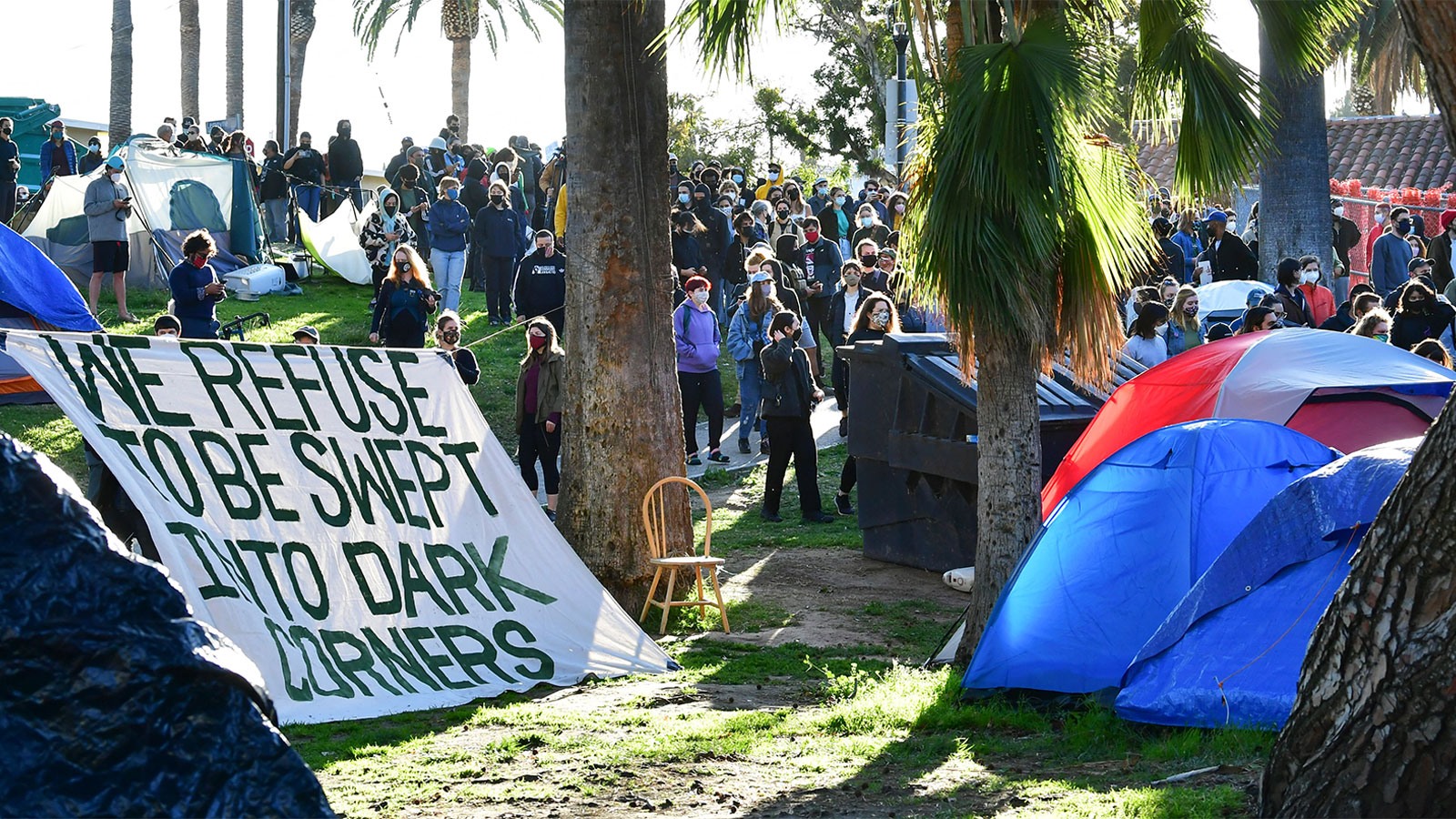
A neighborhood garden, a tasks program, meal circulation, neighborhood clean-ups: These are the facilities and services that unhoused individuals and shared help companies developed in Los Angeles’ Echo Park after coming together in the park last fall. Together with the lake, with its renowned swan boats, numerous unhoused individuals nestled throughout the pandemic, establishing camping tents versus the downtown horizon.
David Busch-Lilly, a regional organizer for homeless rights who has himself been unhoused for the past 20 years, informed Grist he had actually never ever seen anything like it. “The park had actually ended up being such a tranquil sanctuary throughout lockdown,” he stated, in big part due to the fact that the COVID-19 shutdown put a short-lived time out on the city’s policy of by force eliminating comparable encampments to perform walkway and street cleansings.
However on March 25, the neighborhood vaporized in the blink of an eye. Cops choppers rumbled in the sky. The city installed chain-link fences to confine the camp, turning the once-autonomous neighborhood into what protestors and homeowners of the park called an “al fresco jail.” A minimum of a lots individuals were left caught inside the park by the fencing.
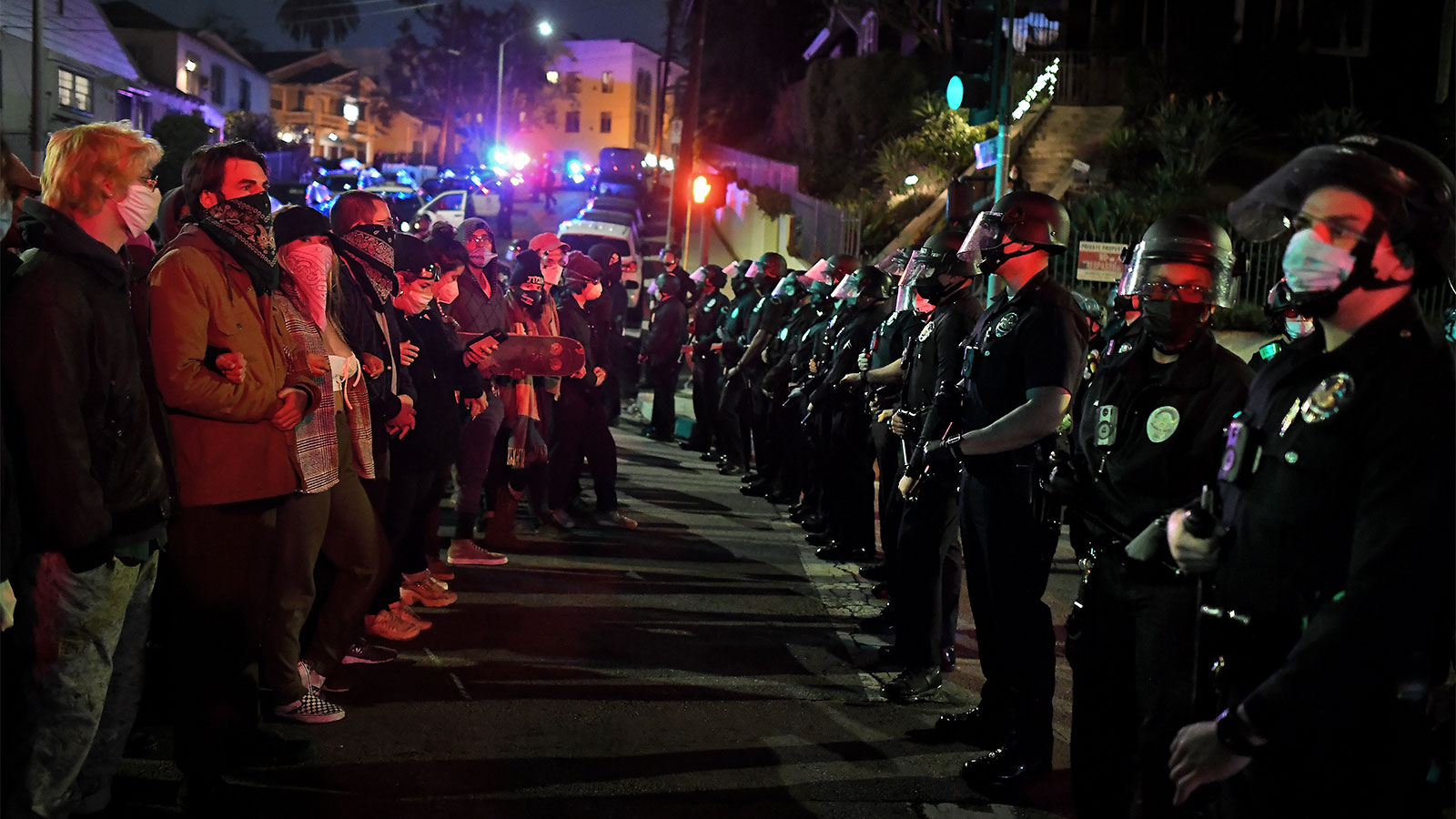
Numerous Angelenos collected outside the park as the authorities followed orders from the city board to displace more than 200 citizens residing in the encampment, regardless of COVID-19 standards from the Centers for Illness Control and Avoidance, or CDC, which state that clearing such encampments can increase the danger of viral transmission.
The cops’s usage of “ less-lethal” rubber bullets, batons, and pepper spray apparently left a minimum of 4 protestors with concussions and damaged limbs Eventually, authorities apprehended 182 individuals, consisting of a minimum of 3 press reporters and a group of legal observers. A handful of citizens living at the park were likewise jailed for not consenting to leave the houses they ‘d developed.
The conflict at Echo Park presents a concern that cities throughout the nation are fumbling with: What function should public green area play in the city real estate deficiencies laid bare by the COVID-19 pandemic? While the coronavirus required individuals into their houses, those without real estate settled in public areas for security, developing casual neighborhoods in newly-freed locations like parks and downtown pathways. As Los Angeles raises its pandemic constraints, record-high real estate rates and an increase in homelessness are developing a problem that city leaders are selecting to attend to through policing.
Both Mitch O’Farrell, the city board member who represents Echo Park, and Mayor Eric Garcetti called the displacement and authorities reaction a “excellent success.” O’Farrell, who supported the expulsion of the encampment, stated in an interview that citizens were displaced with “thoughtful and thoughtful action” that was required to keep security at the park. Garcetti has actually called it “the biggest real estate shift of an encampment ever in the city’s history.” (The workplaces of Council Member O’Farrell and Mayor Garcetti did not react to Grist’s ask for remark in time for publication, and a Los Angeles Cops Department representative decreased to comment.)
According to O’Farrell, “209 individuals experiencing homelessness” were moved “into transitional shelter with encouraging services, healthcare, and other humane and essential resources.” According to the Los Angeles Homeless Provider Authority, the number was closer to180 Of those, 138 were briefly put in the Job Roomkey program, which offers hotel spaces for unhoused Angelenos. Of those 138, numerous were back on the street within a matter of days
Supporters for the unhoused compete that the expulsion throughout the middle of a public health crisis supplied an incorrect option to homelessness, specifically when just momentary real estate was used to those forced out. Beyond neglecting the CDC’s standards for stopping expulsions, supporters state the displacement happened in direct infraction of United Nations requirements specifying that “casual settlements,” such as camping tents and camps, must be safeguarded in the exact same way as conventional real estate.
” Expulsion, violent displacement of an unhoused neighborhood, is very first and primary an inhumane and inadequate method to resolving homelessness, particularly throughout a pandemic,” Hilary Malson, a scientist who studies real estate and displacement at the University of California, Los Angeles, informed Grist.
Ananya Roy, director of UCLA’s Institute on Inequality and Democracy, states that L.A.’s focus on attending to homelessness through policing has actually led to city regulations that criminalize oversleeping one’s cars and truck or on particular streets, along with others that restrict the quantity of personal effects that unhoused individuals can have. The cumulative outcome is “a vicious circle that deepens the precarity and exemption of unhoused individuals,” according to Roy.
Numerous scholars, supporters, and unhoused individuals think that Task Roomkey, which introduced in March 2020, is a growth of these criminalizing policies. The program, moneyed by the federal government, was developed to assist suppress the spread of COVID-19 by using shelter to the unhoused, who are specifically susceptible to the infection since of their failure to separate. Regardless of vowing to provide 15,000 hotel spaces for unhoused individuals, L.A. just provided one-third of that overall at the program’s height last September. While involvement decreased due to reports of discrimination versus handicapped individuals and punitive guidelines, the city stopped working to send documents to get repaid for the program by the federal government, leaving an approximated $59 million space in the city spending plan.
” It’s extremely paradoxical: They call it ‘Task Roomkey,’ however individuals do not even get a real secret to their spaces,” Roy informed Grist. “They are pushed into curfew conditions, browsed head to toe prior to they can even enter what is apparently their own area.”
As an outcome of the program’s debates and failures, it is arranged to be ended entirely in September. Previously in the year, activists recommended that the city reform the program by by force commandeering unused hotel spaces for the unhoused, because hotels were so hesitant to provide their centers to the program. Now they’re looking for more long-term services.
O’Farrell, the city board member, believes he has a non-traditional repair with a $ 3 million strategy to set up a “town” of 38 64- square-foot Pallet shelters for unhoused individuals in Echo Park. The upraised shelters, which are called “small houses” and are smaller sized than the majority of prison cells, will hold 2 unhoused individuals each and possibly provide much better defense from rain and heat waves While O’Farrell has actually provided this as a “humane” option that might last for several years, Theo Henderson, an unhoused Angeleno, informed Grist that he does not rely on city leaders whose policies have actually regularly resulted in more policing in his neighborhood.
” We need to stop counting on a city that has actually criminalized us,” he stated. “No matter the concept, it has actually caused more criminalization for us.”
Malson, who has actually studied real estate justice and encampments throughout COVID-19, states that in the lack of irreversible real estate options, federal governments must sanction encampments and offer services that appreciate “the company and autonomy of unhoused individuals” rather of kicking out and criminalizing them. That might appear like alleviating limitations on unhoused individuals’s right to keep personal effects, developing and keeping cleaning stations and health centers, and legalizing life in public areas.
Throughout the nation, consisting of in Los Angeles, encampments are criminalized by regulations that make it prohibited to camp in public parks. According to the National Law Center on Homelessness and Hardship, 57 percent of cities forbid outdoor camping in particular public areas Malson states that permitting individuals to oversleep parks over night might be an action towards legalizing encampments.
” The city might do so a lot more in making more area offered for unhoused individuals, as far as rezoning parcels as camping sites, rezoning other green area, such as golf courses and parts of public parks, as areas for unhoused individuals,” stated Malson. “These seem like over-the-top concepts, however they have actually been performed in the past in Los Angeles.”
Certainly, from 1946 to 1954, parts of L.A.’s renowned Griffith Park were house to a settlement called Rodger Young Town which contained 1,500 emergency situation real estate systems to house veterans returning from The second world war. Malson states the city’s believing around real estate must incorporate public green areas as “resources that can be tapped for the arrangement of safe shelter.”
Beyond offering reprieve from displacement and a sense of neighborhood to the previous homeowners of the encampment in Echo Park, the green area likewise used a huge psychological health advantage, according to Busch-Lilly. “Simply the setting, in nature, was so reliable in attending to homeless individuals’s injury and mental disorder,” stated Busch-Lilly. “It’s the most efficient psychological treatment for unhoused individuals that I, in 20 years, have actually seen.”
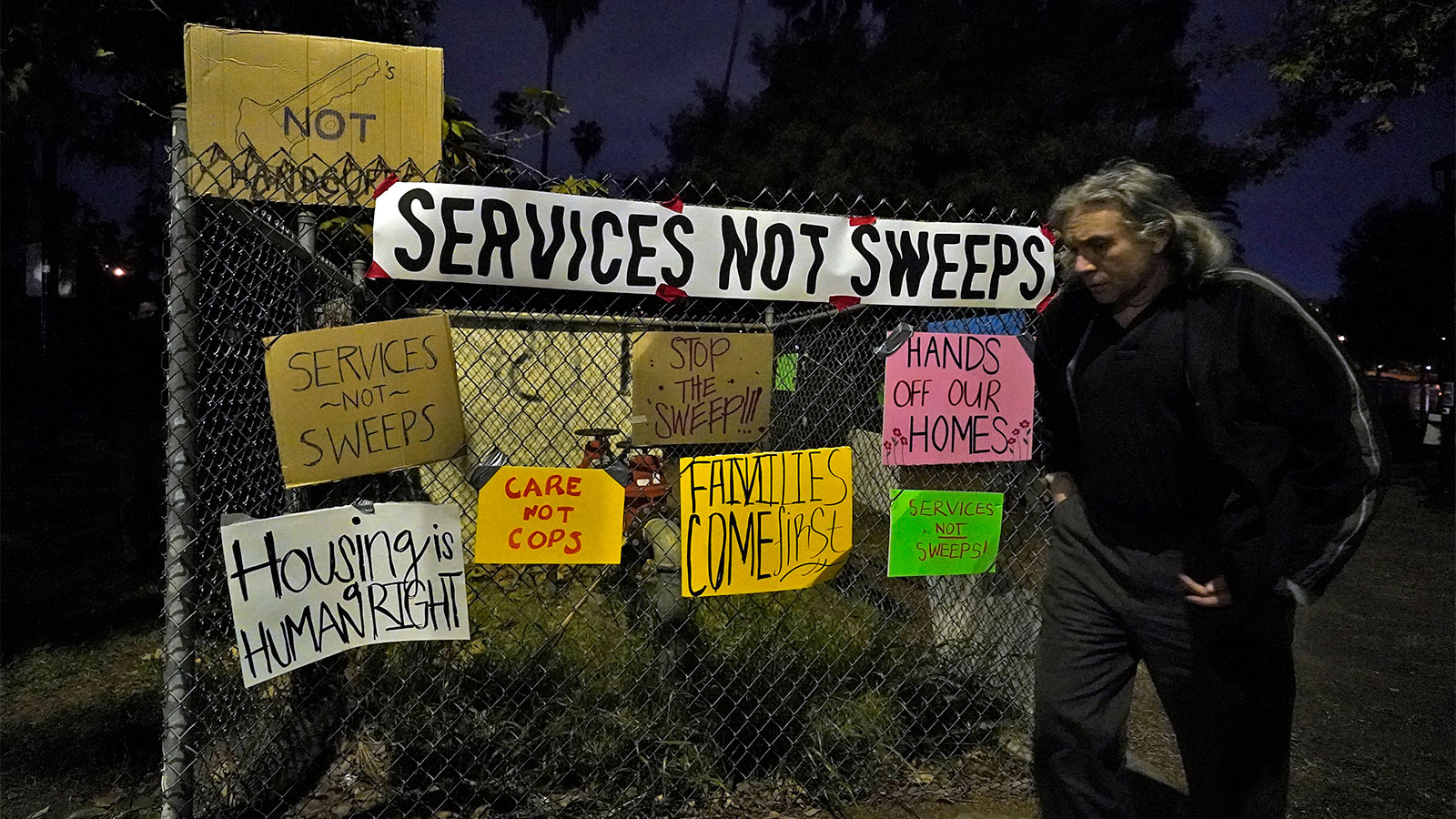
However for now, nobody– housed or unhoused– can access the park. 2 weeks back, protesters held a candlelight vigil outside the park, continuing past the fences that held an indication somebody had actually hung from the wire in a direct rebuke to O’Farrell, the city board member: “This park is individuals’s. Not Mitch’s.”
Correction: This short article initially misreported David Busch-Lilly’s surname.

No comments:
Post a Comment