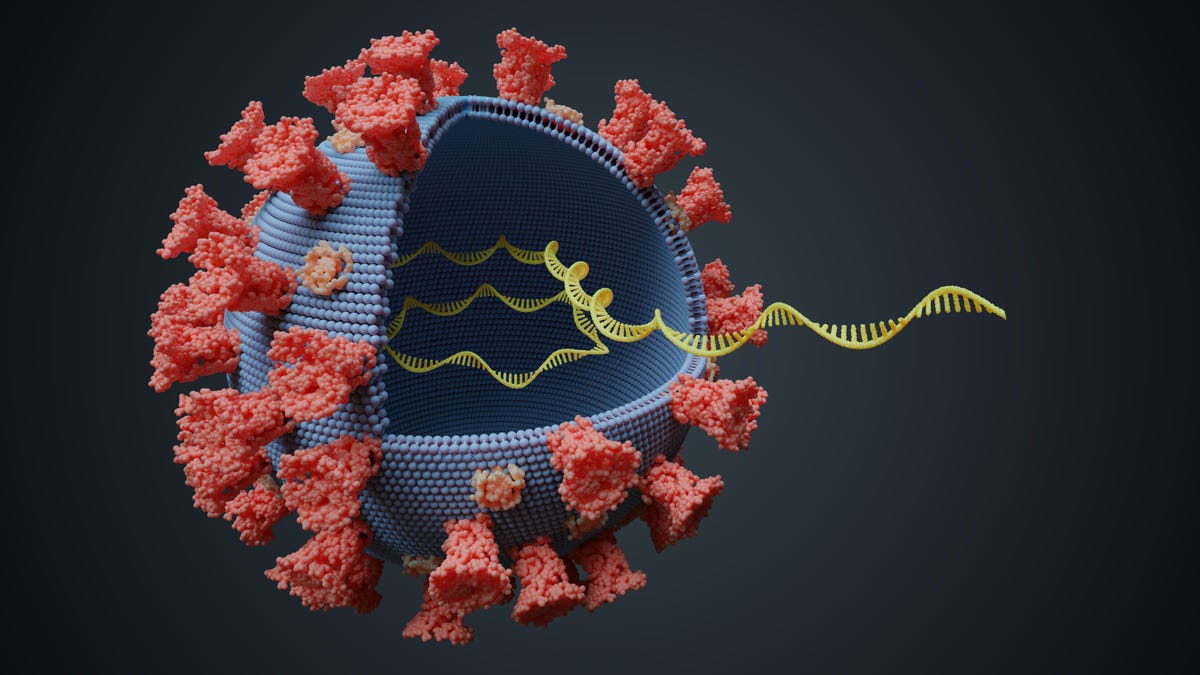

Infections mutate; so does whatever, actually. However professionals are now concerned about a few of the countless coronavirus variants that have actually turned up around the globe. We blogged about the UK variation last month; now there are more, consisting of one in Los Angeles. You do not require to panic However it’s good to be informed.
One of the big factors we’re seeing new variations now, a year into the pandemic, is that there’s just so much more virus out there than there was 12 months ago. The more virus there is in the world, the more chances it has to mutate. And the more versions there are, the higher the opportunities that some of them will be bad news.
If we (as a global neighborhood) had done a much better job of consisting of the virus in the very first place, we might not have gotten to the point where there are multiple versions that are different adequate to stress the professionals. Here we are.
Another thing to keep in mind is that you’ll just discover variations if you’re looking for them. The UK variant, B. 1.1.7, was discovered in part because the UK does a great deal of what’s called monitoring testing– keeping track of exactly what kinds of coronaviruses are out there. The U.S. does a few of this too, but much less. The B. 1.1.7 variant was most likely currently in other countries by the time it was found in the UK; they just had not discovered it yet.
G/O Media may get a commission
What are the versions to understand?
B. 1.1.7 was discovered in November 2020 in the UK, where it had actually probably been flowing because September or earlier. This New york city Times short article has more information on the stress and its mutations. It seems to be 50%more transmissible than a typical COVID virus. It has several mutations, consisting of 8 on the spike protein.
( The spike protein is the part of the infection that communicates with our cells. When we make antibodies to the spike protein, those antibodies can stop the infection from infecting us. The mRNA vaccines include the genetic code of the spike protein, which permits our cells to make the protein and then make antibodies to it)
B. 1.1.7 is more transmissible, but the disease it causes does not appear to be any worse than typical.
B. 1.351 was discovered in South Africa, in samples dating back to October 2020, and it likewise has mutations in the spike protein. It seems to be more transmissible than typical COVID, however does not alter the intensity of disease. Both this variant and the one from the UK share an anomaly called N501 Y. < a data-ga="[["Embedded Url","External link","https://www.biorxiv.org/content/10.1101/2021.01.07.425740v1",{"metric25":1}]] href=" https://www.biorxiv.org/content/10 1101/2021 01.07 425740 v1" rel=" noopener noreferrer "target= "_ blank "> A current research study, posted as a preprint, found that the Pfizer vaccine does seem to protect against variants with this mutation.
P. 1 is a version from Brazil, very first spotted in December2020 It also has anomalies that appear concerning, including to the spike protein. Among its anomalies, E484K, may have the ability to avert antibodies; there’s some< a data-ga="[["Embedded Url","External link","https://www.statnews.com/2021/01/07/coronavirus-mutation-vaccine-strength/",{"metric25":1}]] href =" https://www.statnews.com/2021/01/07/ coronavirus-mutation-vaccine-strength/ "rel=" noopener noreferrer" target=" _ blank" > reason to believe that people who have recuperated from a previous case of COVID can be infected by these anomalies.
CAL.20 C is a variation that’s < a data-ga="[["Embedded Url","External link","https://www.latimes.com/california/story/2021-01-20/vaccines-aggressive-strains-and-fatigue-california-hits-3-million-covid-cases-and-a-crossroads",{"metric25":1}]] href=" https://www.latimes.com/california/story/2021-01-20/ vaccines-aggressive-strains-and-fatigue-california-hits-3-million-covid-cases-and-a-crossroads" rel=" noopener noreferrer" target=" _ blank" > ending up being popular in Los Angeles We don’t understand much about it.
For all of these variants, the science is still brand-new. The important things we know about them are tentative. None of them seems to cause more serious disease; the majority of are probably prone to the existing vaccines; and PCR tests still appear to be able to find them.
They have likewise typically end up being the dominant strains in their places, however for a few of the variations, there’s a little bit of a chicken-and-egg problem in figuring out whether they are accountable for spikes in cases or not.
What occurs now?
Two things. First, researchers are dealing with addressing the unanswered concerns about these versions.
For instance, we need to learn whether they’re really more transmissible, and if so, by just how much. We need to know if the variants can evade our natural resistance( which would suggest you could capture the infection two times) and whether they can evade immunity from the various vaccines and vaccine candidates that currently exist. We need to understand if any of the variants trigger more serious disease or if there are any medical differences. And we need to amp up our monitoring, in every country, to be able to find new variations as they emerge and enjoy where existing variations are taking over.
In time, if it ends up that new variations can evade existing vaccines, the vaccines might need to be upgraded. We do this for the influenza vaccine every year; it’s possible we may need to do the exact same thing for the COVID vaccine.
But the other action product is simpler, if still tough: We need to do all the exact same things we’ve been doing for avoidance, just to a greater degree. If a variation is more transmissible, it’s even more important to wear masks and stay at home and take screening seriously. It’s additional,additional essential to get vaccines to individuals as rapidly as possible. In that sense, even if the infection modifications, our most crucial steps for controlling it have not changed.

No comments:
Post a Comment