Editor’s note: Discover the most recent COVID-19 news and assistance in Medscape’s Coronavirus Resource Center
.
For well over a year, the COVID-19 pandemic has actually been the greatest story on the planet, costing countless lives, affecting a governmental election, and trembling economies all over the world.
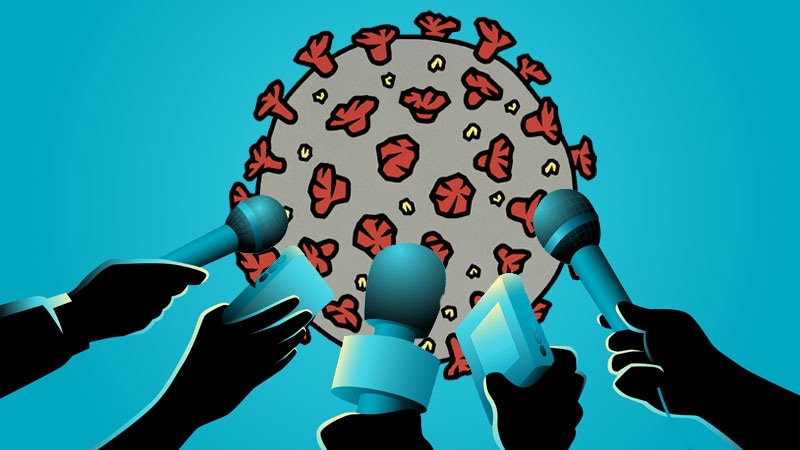
However as vaccination rates increase and constraints unwind throughout the United States, relief is starting to blend with reflection. Part of that reflection implies facing how the media illustrated the crisis– in manner ins which were practical, hazardous, and someplace in between.
” This story was so frustrating and the quantity of journalism done about it was likewise frustrating and it’s going to be a while prior to we can do any type of thorough introduction of how journalism actually carried out,” stated Maryn McKenna, an independent reporter and journalism teacher at Emory University in Atlanta, Georgia, who focuses on public and worldwide health.
Some “Heroically Excellent” Reporting
.
The pandemic hit at a time when journalism was under a great deal of pressure from external forces– weakened by politics, swimming through a sea of false information, and pushed by monetary pressure to produce more stories faster, stated Emily Bell, establishing director of the Tow Center for Digital Journalism at Columbia Journalism School, New York City City.
The pandemic drove massive audiences to news outlets as individuals looked for trusted info and increased the gratitude lots of people felt for the work of reporters, she stated.
” I believe there’s been some heroically great reporting and some truly compassionate reporting too,” stated Bell. She mentions The New York City Times stories honoring the almost 100,000 individuals lost to COVID-19 in Might 2020 and The Atlantic’s COVID Tracking Job as incredibly fine examples.
Journalism belongs to a complex, and developing, details environment identified by “conventional” tv, radio, and papers however likewise social networks, online search engine results, specific niche online news outlets, and clickbait websites.
On the one hand, social networks supplied a method for doctors, nurses, and researchers to speak straight to the world about their experiences and research study. On the other hand, it’s challenging to raise the truly great of conventional media over all of the bad or unhelpful signals, stated Bell.
However, at the end of the day, much of journalism is an organization. There are rewards in the market for tabloids to do marvelous protection and for outlets to press deceptive, clickbait headings, Bell stated.
” In some cases we’ll slam reporters for ‘getting it incorrect,’ however they may be getting it right in their organization design, however getting it incorrect in regards to what it’s providing for society,” she stated.
” We require to do a self-examination on when or if the dust from this ever settles is just how much of the previous year was considered as an organization chance and did that obstruct of notifying the general public effectively,” McKenna stated.
Digital platforms and reporters likewise require to review how stories develop on one another, especially online, stated Bell. If you look for negative effects of the Johnson & Johnson vaccine, for instance, you will see a list of lots of headings that may provide you the impression this is a significant issue without the context that these impacts are extremely unusual, she keeps in mind.
There was likewise a workers issue. Diminishing newsrooms over the last years implied lots of outlets didn’t have actually committed science and health reporting, or really couple of staffers, if any. Throughout the pandemic, all of a sudden basic task and politics press reporters needed to be science and health press reporters, too.
” You have a hard-enough time with these problems if you’re a relatively skilled science reporter,” stated Gary Schwitzer, a previous head of the health care news system for CNN, journalism teacher at the University of Minnesota, and creator of the guard dog website HealthNewsReview.org
And outlets that had the staffing didn’t constantly put science press reporters to complete usage, McKenna stated. In March and April of 2020, significant media outlets ought to have sent out science press reporters, not politics press reporters, to President Donald Trump’s White Home press instructions, which frequently consisted of inaccurate declarations about COVID-19 science.
” I simply do not feel that the huge outlets comprehended that knowledge would have made a distinction,” she stated.
New Difficulties, Old Issues
.
A few of the science journalism done throughout the pandemic has actually been a few of the very best ever seen in this nation, stated Schwitzer. In between the peaks of quality, there is “the day-to-day drumbeat protection of dreck,” he included.
A lot of the concerns with this dreck protection aren’t brand-new or special to the pandemic. Over the last year there have actually been far too numerous news stories based entirely on weak info sources, like a drug business press release or a not-yet-peer-reviewed preprint short article that hasn’t been put into correct context, stated Schwitzer.
” We understand that the media in basic tends to represent science as more specific than it is.”
Dominique Brossard, PhD
A quality science story must constantly consist of an independent viewpoint, he stated, however numerous COVID-19 stories missed out on that point of view. This isn’t a brand-new concern for science protection– at Health News Evaluation, Schwitzer and his associates saw stories without proper independent sources every day for 15 years.
It’s likewise challenging to blog about unpredictability without over- or underselling what researchers understand about a specific phenomenon. “We understand that the media in basic tends to depict science as more specific than it is,” stated Dominique Brossard, PhD, teacher and department chair at the University of Wisconsin– Madison and a professional on the crossway in between science, media, and policy. This can cause confusion when the science, and the suggestions based upon that science, modifications.
” The general public has an actually challenging time comprehending what unpredictability implies within science,” stated Todd P. Newman, PhD, assistant teacher at the University of Wisconsin– Madison who studies tactical interaction within the context of science, innovation, and the environment.
” I believe the media typically has actually been excellent on the topic,” stated Paul Offit, MD, director of the Vaccine Education Center, going to doctor in the Department of Transmittable Illness at the Kid’s Healthcare facility of Philadelphia, and a popular professional voice throughout the pandemic. “I believe where they have actually been imperfect is they tend to be a little bit more remarkable in regards to how we’re doing.”
Offit isn’t the just professional to indicate the drama of COVID-19 protection. A research study released in March 2021 by the National Bureau of Economic Research study discovered 87%of stories by significant United States media outlets leaned unfavorable in the tone of their COVID-19 reporting, compared to 50%of stories from non-US significant outlets and 64%of posts in clinical journals. The unfavorable focus continues even around favorable advancements, like vaccine trials and school re-openings.
John Whyte, MD, primary medical officer for WebMD, stated he is extremely happy with the method WebMD and Medscape increase production of video series and other material to provide doctor the most updated assistance on a quickly developing medical scenario.
” However I believe as [we] began to make development– particularly in the last 6 months– the protection was never ever stabilized enough; any favorable news was instantly continued by unfavorable,” he stated.
” You wish to be sincere, however you likewise do not wish to be alarmist– which’s where I believe the obstacle is at times in the media,” stated Whyte. “We didn’t put adequate optimism in sometimes, particularly in current months.”
” Any great protection on vaccines right away [was] covered by [we] may require boosters in the fall. Why can’t [we] have a chance to breathe for a little while and see the bright side?” he asked.
Variations or Scariants?
.
Negativeness and worry formed much of the protection around versions and vaccines previously this year. In February 2021, Zeynep Tufekci, PhD, a sociologist at the University of North Carolina at Chapel Hill School of Details and Library Science, composed in The Atlantic about just how much reporting has actually not shown “the genuinely remarkable truth of these vaccines,” and has actually rather highlighted “a chorus of unrelenting pessimism.”
This felt specifically real previously in 2021, when great deals of protection consistently highlighted what immunized individuals still might refrain from doing
Eric Topol, MD, editor-in-chief of Medscape and executive vice president of Scripps Research study in La Jolla, California, stated New York City Times editors informed him previously in the pandemic that he could not utilize the word “scariant” in a viewpoint piece about the media’s extremely afraid and often unreliable reporting around COVID-19 variations since they stressed it would appear like the Times was following other media outlets.
” A variation is innocent up until tested guilty,” stated Topol. Had reporters approached the topic from that viewpoint, he stated we would have seen “a lot more loyal reporting.”
Brossard and Newman fret that concentrating on unusual unfavorable habits, like individuals who break social distancing and mask guidelines by collecting at the beach or the bar, makes those actions appear more typical than they really are.
The proof recommends that “if you reveal these examples to individuals, you motivate them to do the very same habits,” stated Brossard.
There have actually been other errors along the method, too. Early in the pandemic, numerous outlets pointed audiences to main federal government sources of info, a few of which, like the White Home press instructions in March and April of 2020, wound up being a few of the most virulent spreaders of false information, stated Bell.
Prior To that, a handful of reporters like Roxanne Khamsi were the couple of pressing back versus the dominant media story in early 2020 that the unique coronavirus was less worrying than the seasonal influenza
” Science reporters have actually constantly been blogging about research studies that often oppose each other, and what’s taken place is that has actually just been condensed in time,” stated Khamsi, a health care press reporter for outlets like WIRED publication and The New York City Times and a previous primary news editor for Nature Medication.
.
Politics and False Information
It’s difficult to discuss media protection of COVID-19 without discussing politics and false information.
Protection of the pandemic was politicized and polarized from the very start, stated Sedona Chinn, PhD, an assistant teacher at the University of Wisconsin– Madison who looks into the occurrence and results of clinical differences in media.
By taking a look at network news records and short articles from nationwide outlets like the Washington Post and The New York City Times, Chinn and her coworkers had the ability to identify politicization of protection by counting the points out of political leaders vs researchers in COVID-19 protection and polarization by taking a look at how various or comparable the language was surrounding points out of Republicans and Democrats.
If the 2 celebrations were collaborating or on the exact same page, they reasoned, the language would be comparable.
From mid-March through Might 2020, Chinn and fellow scientists discovered political leaders were included more frequently than researchers in paper protection and as regularly as researchers in network news protection. They likewise discovered polarized language around Republicans and Democrats, especially in stories explaining battles in between the (at the time) Republican nationwide federal government and Democratic state and regional leaders.
It’s possible that polarization in news protection assisted added to polarized mindsets around the infection, the authors compose in the research study, which was released in August 2020 in the journal Science Interaction.
.
The politicization and polarization of the concern is mirrored in our fractured media environment, where individuals tend to check out, listen, and enjoy outlets that line up with their political leanings. If that relied on outlet functions false information, individuals who follow it are most likely to accept that incorrect info as fact, stated Matt Motta, PhD, a political researcher at Oklahoma State University whose research study consists of popular opinion and science interaction.
This holds true throughout the political spectrum, he stated. When it concerns COVID-19, nevertheless, conservative media outlets like Fox News and Breitbart are most likely to promote conspiratorial tropes and false information about the pandemic, according to Motta and his partner Dominik Stecula, PhD, a political researcher at Colorado State University who studies the news media environment and its impacts on society.
Throughout the media community, reporting on the “ infodemic” accompanying the pandemic– the fast spread of false information and disinformation about the infection– has actually been a significant difficulty. Outlets might not be developing the false information, however they are the ones picking to provide it a platform, stated Motta.
By duplicating an incorrect concept, even with the objective of exposing it, you can accidentally trigger the info to stick in individuals’s minds, stated Brossard.
” Even if something is questionable does not suggest it deserves covering,” stated Motta. Utilizing vaccines as an example, he stated lots of press reporters and researchers alike presume that if individuals have all the truths, they’ll arrive at the side of science.
” That is simply essentially not how individuals consider the choice to get immunized,” he stated. Rather, the option is concluded with cultural aspects, religions, political identity, and more.
The elements and obstacles that formed the media’s protection of the pandemic aren’t going anywhere. Improving science and medical protection in the future is a cumulative job for reporters, researchers, and everybody in between, stated Newman.
” I get in touch with researchers, too, to believe actually deeply about how they’re interacting– and particularly how they’re interacting what they understand and do not understand,” he stated.
For more news, follow Medscape on Facebook, Twitter, Instagram, and YouTube
.

No comments:
Post a Comment